Stress Incontinence Information
Leakage of urine when coughing, laughing, sneezing, running or exercising may be known as stress incontinence.
Stress incontinence is often linked to weakened pelvic floor muscles and may be caused or worsened by:
- Pregnancy and childbirth
- Being overweight
- Constipation
- Chronic coughing
- Ageing and menopause
You Are Not Alone
Stress incontinence is very common. Studies suggest that up to one in three women experience symptoms at some stage in their lives.
It is important not to reduce your fluid intake, as concentrated urine can irritate the bladder and increase the risk of constipation.
What Is The Pelvic Floor?
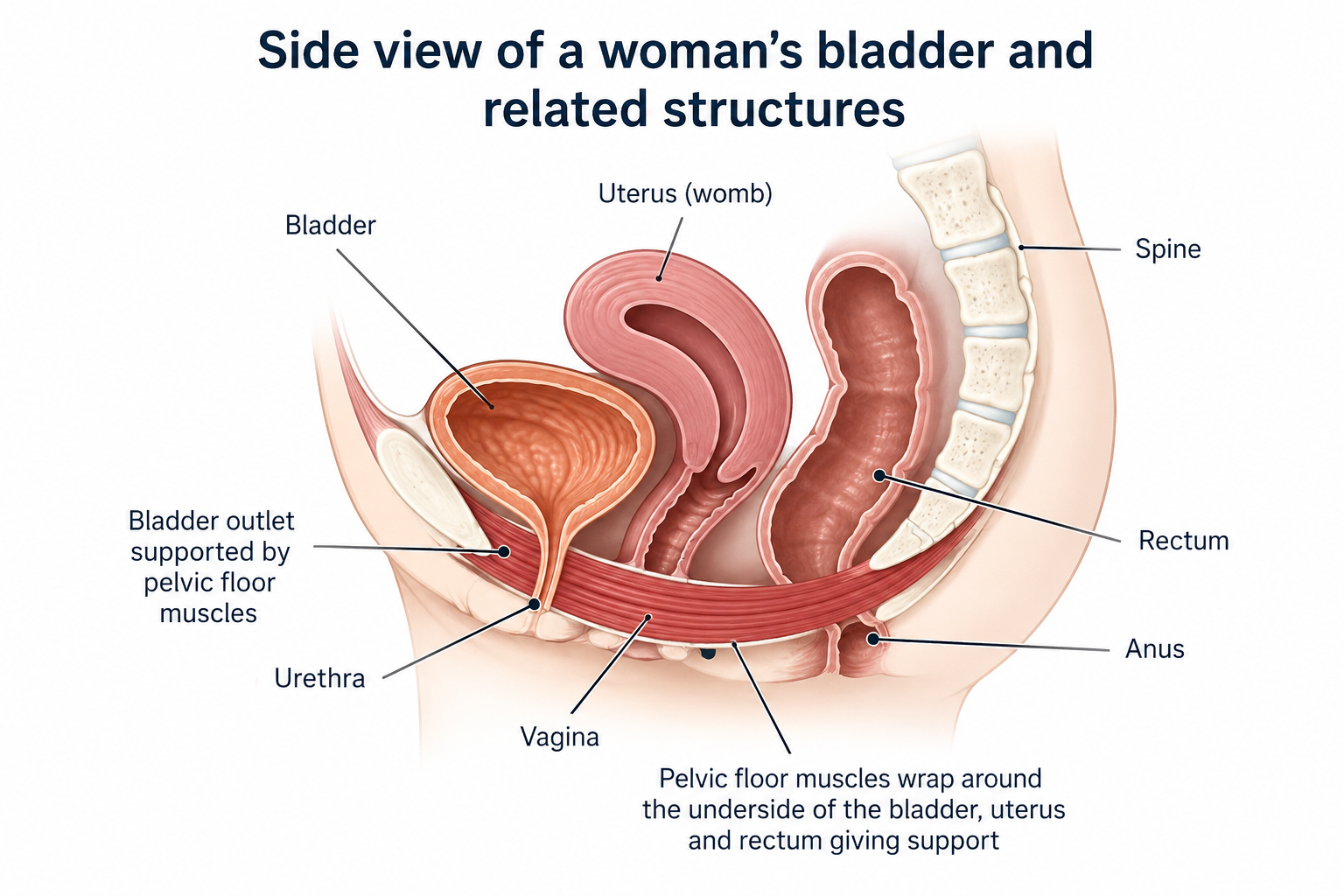
The pelvic floor is a group of muscles that stretch like a hammock from the pubic bone at the front to the base of the spine at the back.
These muscles support the bladder, bowel and womb and help control the release of urine and bowel motions.
How Pelvic Floor Exercises Help
Pelvic floor exercises strengthen the muscles that support the bladder and bowel. Stronger muscles can improve bladder control and reduce urine leakage.
Like any muscle in the body, the pelvic floor becomes stronger with regular exercise and practice.
How To Do Pelvic Floor Exercises
- Sit comfortably with your knees slightly apart.
- Tighten the muscles around the back passage as though trying to stop wind escaping.
- Next, squeeze and lift the muscles around the vagina without tightening your stomach or buttocks.
- Hold the squeeze for as long as comfortable (for example 5 seconds), then relax fully.
- Repeat the slow squeeze 5–10 times with a short rest between each contraction.
- Perform a series of quick squeezes by tightening for one second and relaxing. Repeat 5 times.
- Try to complete the exercises three times each day.
Helpful Tips
- Breathe normally during exercises.
- Avoid tightening your stomach, thighs or buttocks.
- Practice sitting, standing and lying down.
- Consistency is important for improvement.
When Will You Notice Improvement?
Pelvic floor exercises can take time to work. Many people notice improvement after approximately 6–8 weeks of regular daily practice.
As the muscles become stronger, the exercises will become easier and may become part of your normal routine.
When To Seek Further Advice
Please speak to your GP, physiotherapist or continence service if:
- Your symptoms worsen
- You have pain during exercises
- You are unsure whether you are exercising correctly
- Leakage continues despite regular exercise
Bladder and Bowel Service
If you require further advice or support, please contact your local healthcare professional or continence service.