Understanding Fibre
Fibre is an important part of a healthy diet and helps support digestive health, heart health and overall wellbeing.
Fibre may help:
- Prevent constipation
- Improve bowel regularity
- Support healthy cholesterol levels
- Reduce the risk of heart disease and diabetes
- Support weight management
How Much Fibre Do We Need?
Most adults should aim for at least 18g of fibre per day, although many people in the UK eat much less than this.
Fibre is only found in plant-based foods such as fruit, vegetables, grains, beans, nuts and seeds.
Types of Fibre
There are two main types of fibre: soluble fibre and insoluble fibre. Both are important for digestive health.
Soluble Fibre
Soluble fibre absorbs water and forms a gel-like texture in the bowel. It may help soften stools and support healthy digestion.
Foods Rich In Soluble Fibre
- Oats
- Barley
- Rye
- Bananas
- Apples
- Beans
- Carrots
- Golden linseeds
Insoluble Fibre
Insoluble fibre adds bulk to stools and helps food move through the digestive system more easily.
Foods Rich In Insoluble Fibre
- Whole wheat products
- Brown rice
- Nuts and seeds
- Wholegrain cereals
- Raisins and grapes
- Fibrous vegetables
Helpful Fibre Advice
- Try to eat at least five portions of fruit and vegetables each day.
- Choose wholegrain or wholefood options where possible.
- Increase fibre gradually to help avoid bloating or discomfort.
- Drink enough fluids throughout the day.
- Aim for approximately 1.5 litres (3 pints) of fluid daily.
Important
Fibre works best when combined with good hydration. Drinking enough fluid helps fibre move through the digestive system properly.
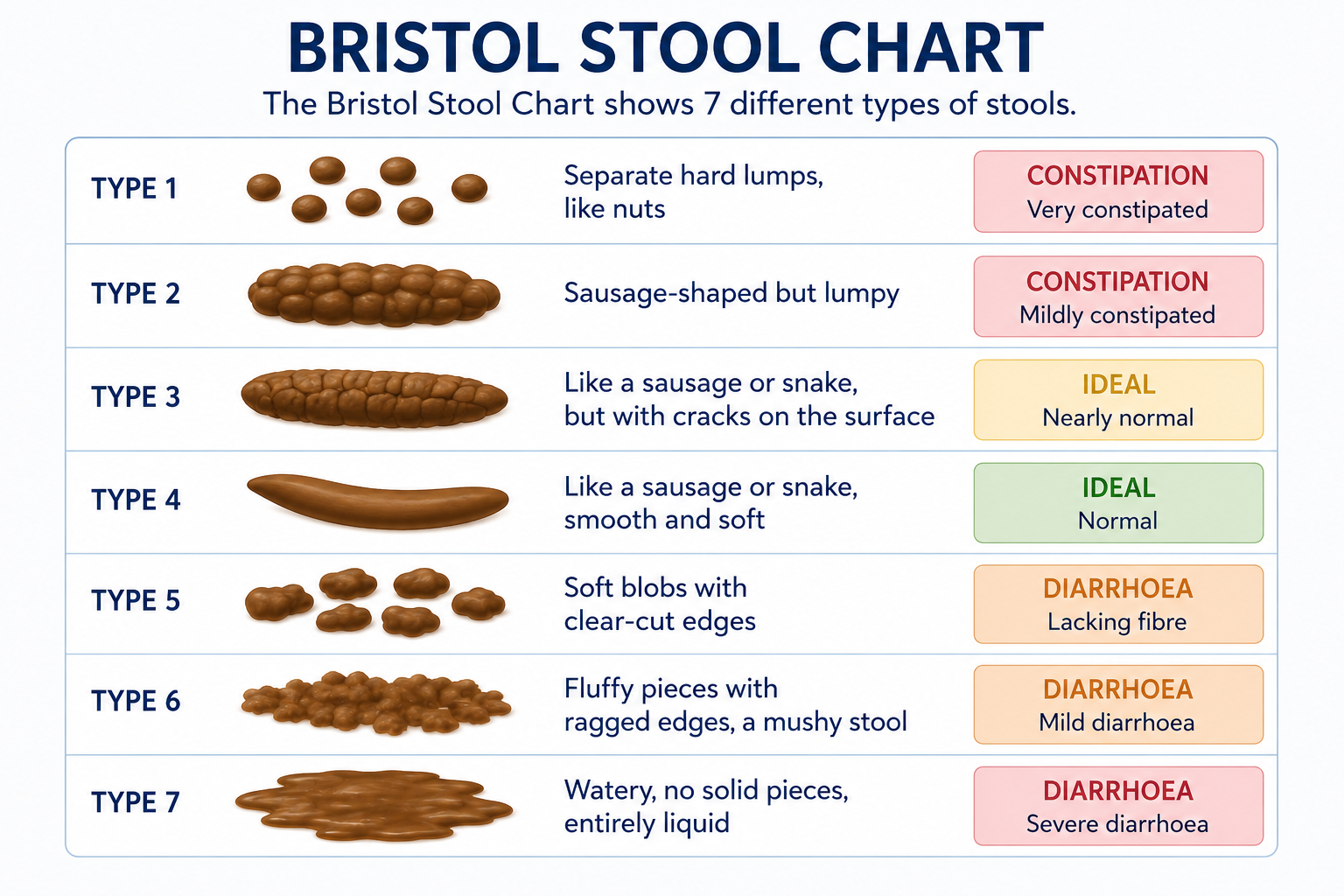
Fibre and Stool Consistency
The type of fibre you need may depend on your bowel symptoms.
- Hard or pebbly stools (Bristol Stool Chart Types 1–3):
Increase insoluble fibre intake. - Ideal stools (Type 4):
Continue a balanced fibre intake. - Loose or watery stools (Types 5–7):
Increase soluble fibre intake.
Digestive Conditions
Some people with digestive conditions such as Irritable Bowel Syndrome (IBS) may need to adjust the type or amount of fibre they eat. Please speak to your GP or dietitian for personalised advice.